Pressure Washing Tips — The Honest Homeowner's Guide (2026)
Pressure washing done wrong causes thousands in damage. Done right, it's the best curb-appeal maintenance spend you can make. Here's everything we wish every homeowner knew before renting a unit.
Pressure Washing Tips — The Honest Homeowner's Guide (2026)
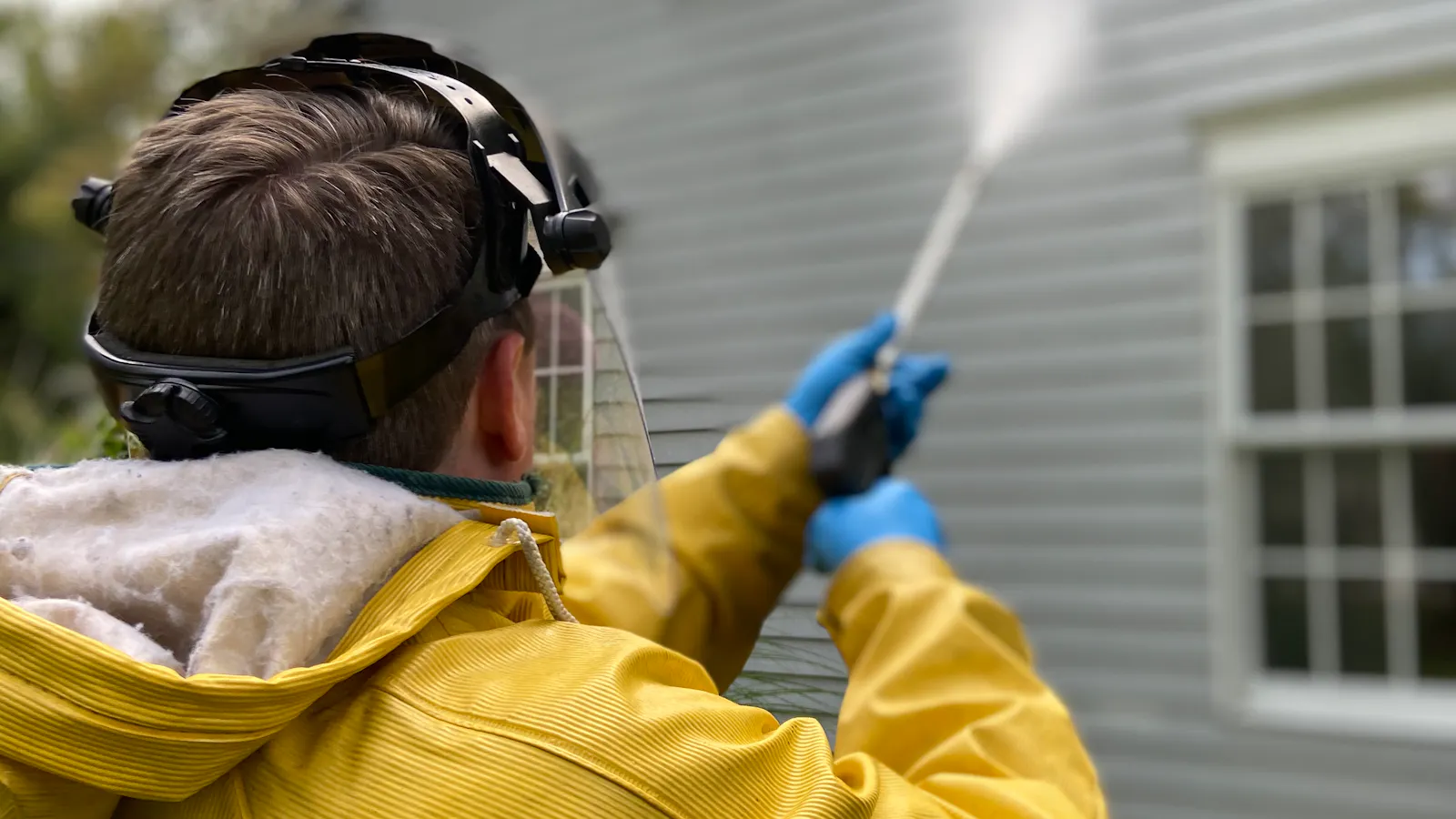
Every spring we get calls from Oakville, Burlington, Milton, and Mississauga homeowners who rented a unit from Home Depot, gave it a good go on Saturday morning, and ended up denting vinyl siding, etching concrete, or blowing pointing out of their brick. Pressure washing is more finicky than it looks, and the mistakes are expensive to fix.
This is the honest guide — what to do, what not to do, and when to hand it off.
The single most important concept: matched pressure
Every surface has a maximum safe pressure, a preferred detergent, and a distance + angle range. Get any of those wrong and you damage the surface. Here's the cheat sheet:
| Surface | Max PSI | Tip | Distance | Detergent |
|---|---|---|---|---|
| Vinyl siding | 500 | 40° fan | 12–18" | Soft-wash sodium hypochlorite + surfactant |
| Fiber cement | 500 | 40° fan | 12–18" | Soft-wash |
| Aluminum siding | 500 | 40° fan | 12" | Soft-wash |
| Engineered wood siding | 500 | 40° fan | 18" | Mild soft-wash |
| Painted wood | 800 | 40° fan | 18" | Oxygen-based brightener |
| Pressure-treated deck | 1200 | 25° | 10" | Wood-safe detergent |
| Cedar deck | 800 | 40° | 12" | Oxygen brightener (no bleach!) |
| Composite decking | 1500 | 25° | 8" | Manufacturer recommended |
| Concrete driveway | 3000 | 15° or surface cleaner | 6" | Degreaser for oil, standard for organic |
| Interlock pavers | 3000 | Surface cleaner | 6" | Biocide for moss, muriatic for efflorescence |
| Stamped concrete | 1500 | 25° or soft brush | 12" | pH-neutral (no acid!) |
| Brick (modern) | 1500 | 25° | 10" | Soft-wash |
| Brick (pre-1960) | 500 | 40° | 12" | Soft-wash only |
| Stucco | 500 | 40° | 12" | Soft-wash |
| Asphalt | DON'T | — | — | — |
The five mistakes we see every year
1. Using high pressure on vinyl siding
The #1 mistake. A homeowner sees a stubborn algae stain on the north side and thinks "more pressure will fix it." High pressure doesn't lift biological staining — detergent chemistry does. High pressure on vinyl dents panels, forces water behind the siding, and creates long-term mold problems inside the wall cavity.
Right approach: Soft wash with sodium hypochlorite + surfactant blend. 8–12 minute dwell time. Low-pressure rinse.
2. Spraying upward into siding laps
Vinyl, fiber cement, and engineered siding are all installed overlapping downward. Spraying upward pushes water UP into the laps, which the system was never designed to handle. Three months later you have mold inside the wall cavity.
Right approach: Always spray downward or at a 45° downward angle. Never upward.
3. Using bleach on cedar or stained wood
Bleach (sodium hypochlorite) is the right detergent for vinyl and algae. It's the wrong detergent for cedar, redwood, or stained softwood. It kills the wood fibres and leaves a dull grey that won't re-stain evenly.
Right approach: Oxygen-based brighteners (percarbonate) for wood. Or a dedicated wood-safe brightener.
4. Pressure washing interlock without re-sanding
Pressure washing an interlock driveway at 3000 PSI is the right technique — but it displaces the joint sand. If you don't re-sand after cleaning, your driveway is now less stable than before you started. Weeds will come back twice as fast.
Right approach: Clean → dry 24 hours → install polymeric sand → activate with mist. Two visits minimum.
5. Not pre-wetting vegetation
Sodium hypochlorite at cleaning dilution is hard on plant leaves. Pre-wetting the leaves gives them a water-film barrier and prevents detergent uptake.
Right approach: Pre-wet all shrubs, flowers, and grass within 10 feet of the work area. Tarp sensitive specimens. Rinse thoroughly when done.
DIY vs hire — how to decide
DIY makes sense for:
- Single-section driveway (concrete) if you're physically capable
- Small deck or patio
- Furniture and outdoor equipment
Hire a professional for:
- Second and third storey siding (fall risk)
- Whole-house siding cleaning (chemistry + even coverage are hard)
- Interlock (unless you're prepared for the multi-visit process)
- Heritage homes (soft brick, limestone, stucco)
- Anything where you're unsure of the right pressure
What a real professional service should include
- Written, fixed-scope quote BEFORE arrival
- Property walk-through before work starts
- Surface-matched pressure and detergent
- Plant protection
- Appropriate detergent chemistry (not just a generic cleaner)
- 18-inch rotary surface cleaner for concrete and interlock
- Rotary surface cleaner for concrete/interlock
- Soft-wash capability for vinyl/fibercement
- Hot water for oil/grease stains (diesel burner units)
- Post-rinse and neutralize
- Walk-through and sign-off
- Before/after photos
- Insurance ($2M general liability minimum)
If a quote lacks any of the above, keep shopping.
When to schedule
Spring (April–June): Winter salt, road grime, pollen. Our busiest season. Summer: Driveway cleanings and deck prep for staining. Fall (September–October): Post-summer dust + winter prep. Winter: Off-season in the GTA; interior window cleaning and planning consults continue.
Bottom line
Pressure washing is a legit maintenance activity with real benefits — curb appeal, material longevity, health (mold/algae). Done wrong it causes thousands in damage. Done right, it's one of the best value-per-dollar home maintenance spends.
If you're going to DIY, read the table above twice. If you're going to hire, look for the checklist. And if you live in Oakville, Burlington, Milton, or Mississauga and want a written quote, we're happy to help.
Quick answers.
Concrete tolerates 3000-3500 PSI with a surface cleaner. Interlock takes 3000 PSI but you must re-sand after. Stamped decorative concrete is max 1500 PSI to avoid etching the stamp pattern. Asphalt — don't pressure wash it, you'll strip the sealer.
Yes — easily. Vinyl tolerates max 500 PSI with detergent, soft-wash technique. Higher pressure dents the panels and voids warranty. Use a fan tip (40°), keep the wand 12-18 inches from the surface, and never spray upward (water behind the panels causes long-term damage).
Annual for most GTA homes. Shaded north elevations or escarpment-proximity homes every 9-12 months. Driveways every 1-2 years.