Soft Wash vs Pressure Wash — Which Is Safe for Your House?
Not the same job. Soft wash (chemistry + low pressure) cleans siding safely. High-pressure wash (mechanical force) cleans concrete. Mixing them up is how siding gets dented and brick pointing gets blown out.
Soft Wash vs Pressure Wash — Which Is Safe for Your House?
If you've been shopping around for someone to clean your siding and some quotes say "pressure washing" while others say "soft wash," you're seeing the most important technical distinction in the industry. These are different techniques for different problems, and the wrong one will damage your home.
The short version
- Pressure washing = high-force water (2000–4000 PSI) cleans via mechanical action
- Soft washing = low-pressure (under 500 PSI) + cleaning chemistry does the work
- Use pressure washing on: concrete, brick, stone, unpainted hardscape
- Use soft washing on: vinyl siding, fiber cement, painted wood, aluminum, stucco
- The wrong technique damages the surface
Why pressure washing is wrong for siding
Vinyl siding is sheet plastic. Fiber cement is pressed cement board. Both are tough, but neither is designed to withstand thousands of pounds of water force at close range. Here's what happens when you pressure-blast siding:
- Dents and deformation in vinyl from water impact
- Cracking in fiber cement, especially at butt joints
- Paint stripping on painted aluminum or wood
- Water intrusion behind siding laps (water goes UP into the overlap, then rots the wall cavity over years)
- Sealant damage around windows, doors, and penetrations
- Warranty voiding on vinyl and fiber cement (every manufacturer says "soft wash only")
And high pressure often doesn't even work. Algae and mildew — the #1 staining culprits on siding — are organic growth that lives ON the surface. Water force might displace visible staining temporarily, but the biology is still there. It comes back in weeks.
Why soft washing is right for siding
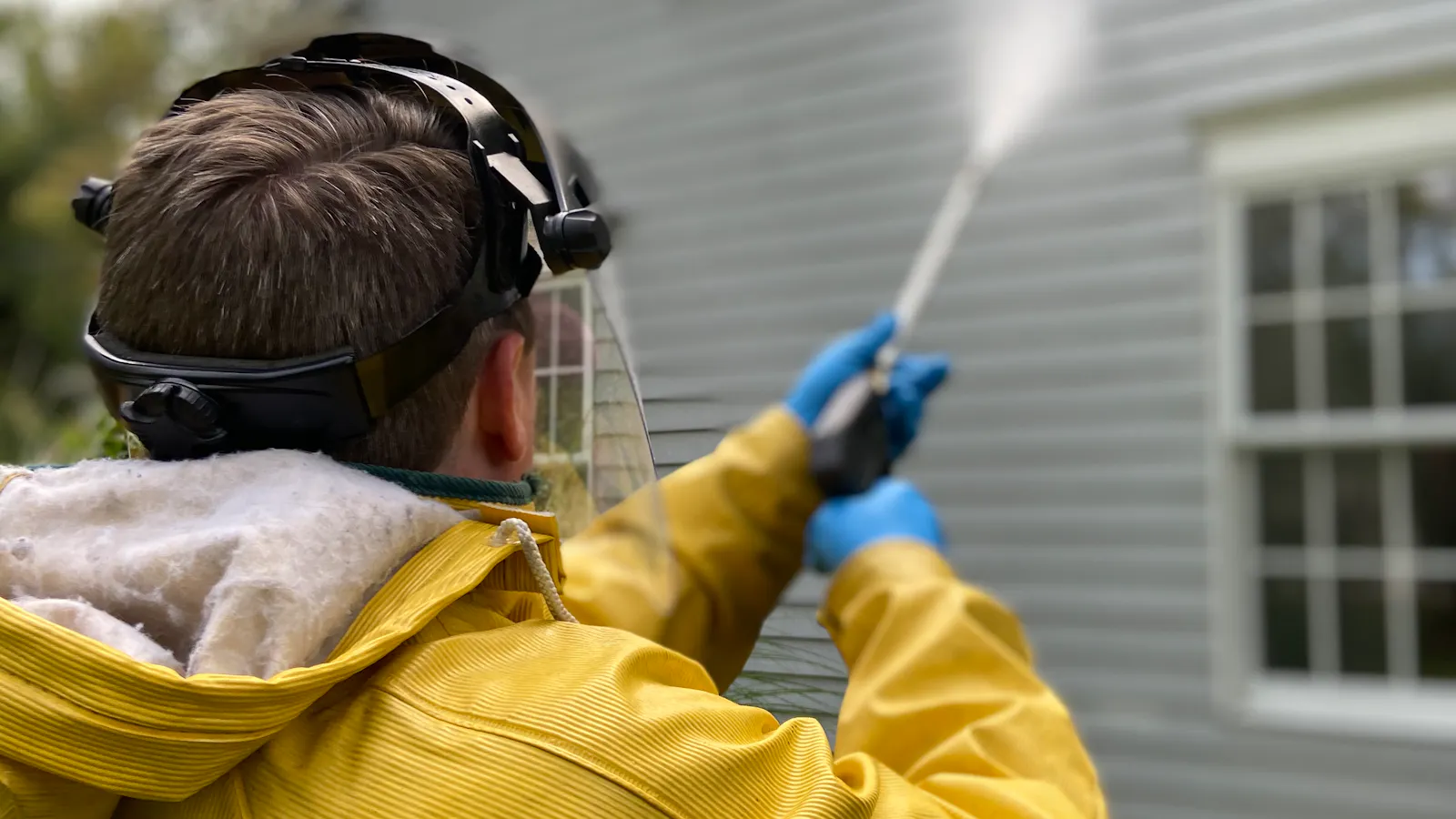
Soft wash uses sodium hypochlorite (aka household bleach) diluted to around 0.5–2%, combined with a surfactant (a soap that helps it cling to vertical surfaces). The chemistry kills algae, mildew, and atmospheric grime. The dwell time (8–12 minutes) lets it work. Then a low-pressure rinse washes everything off.
Advantages:
- Kills the biology, doesn't just displace it — clean lasts 6–12+ months
- Safe for siding material — no risk of dents, cracks, or paint stripping
- Reaches high elevations — soft-wash pumps can push detergent to 3-storey heights
- Consistent coverage — chemistry is uniform, unlike high-pressure streaks
- Plant-safe at working dilution (when applied correctly)
When pressure washing IS the right answer
Pressure washing — actual high-pressure work — is the correct technique for:
- Concrete driveways and walkways (3000 PSI with a rotary surface cleaner)
- Interlock pavers (3000 PSI surface cleaner, followed by re-sanding)
- Unpainted brick and stone (1500–3000 PSI, angle matters)
- Pool decks and patios (surface-dependent pressure)
- Concrete block walls
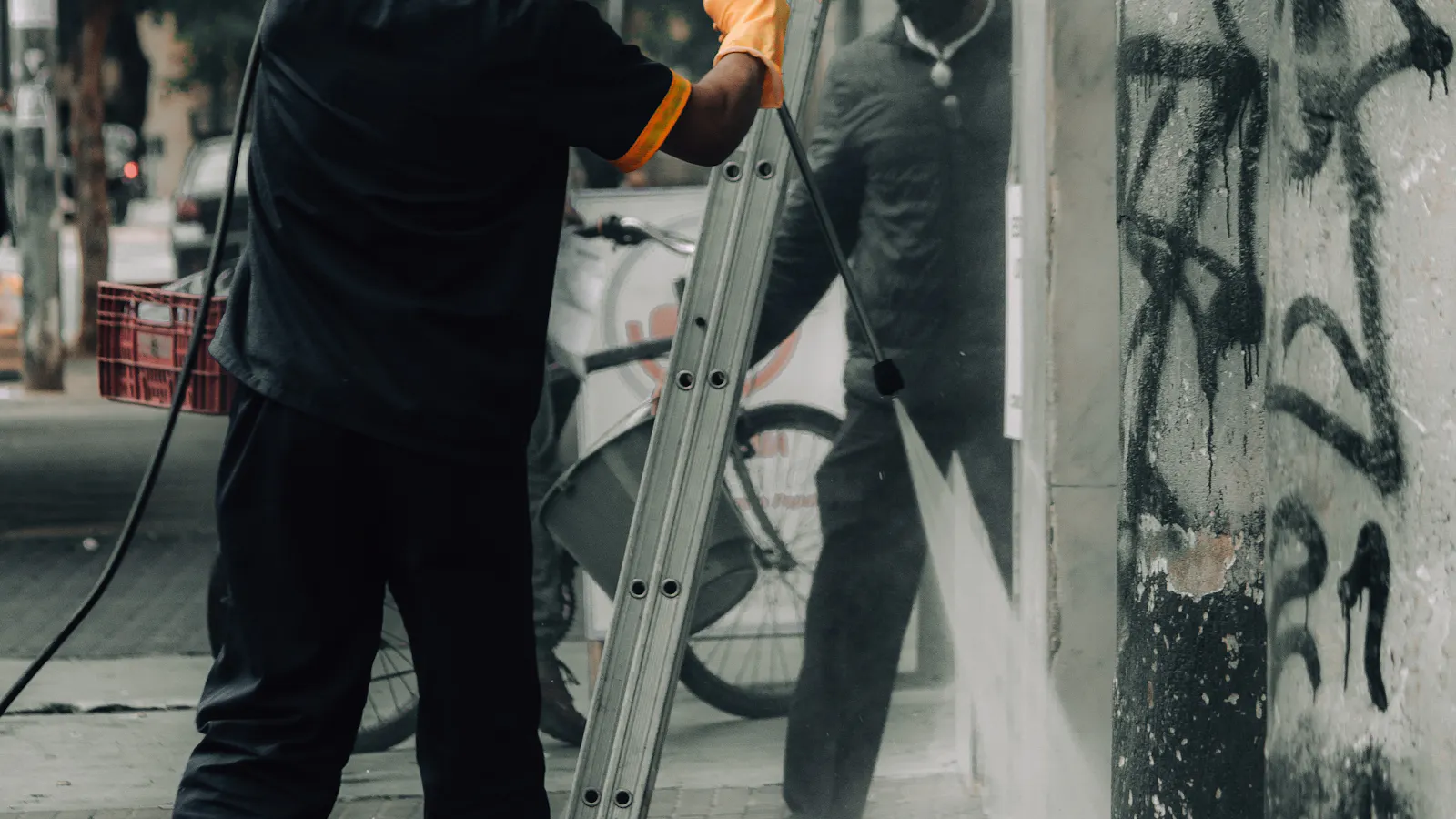
- Industrial surfaces (fence posts, parking lots, commercial storefronts)
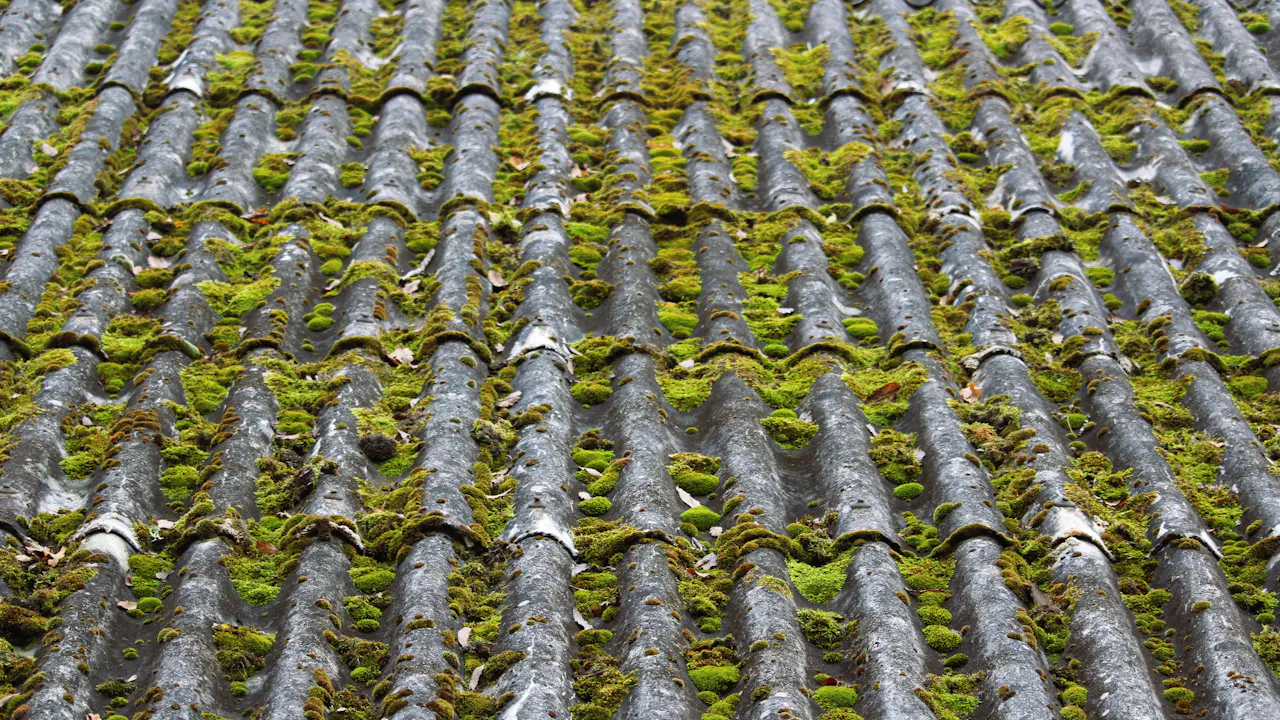
For these, mechanical force removes embedded dirt, efflorescence, moss, and surface contamination that chemistry alone can't touch.
What about roofs?
Roofs are a third category:
- NEVER pressure wash shingles. You strip the granules and destroy the roof.
- Soft wash asphalt shingles with sodium percarbonate (gentler than hypochlorite) or dilute bleach, sprayed from the ground.
- Clean cedar shake with specialty oxygen bleach + rinse — never pressure.
- Clay and tile roof — professional-only, with specific low-pressure technique.
The honest tell when shopping for quotes
A legitimate exterior cleaner will:
- Ask about your siding material before quoting
- Differentiate soft wash from pressure wash in the quote line-items
- Explain the technique for each surface (siding = soft wash, driveway = pressure wash)
- Decline jobs that require the wrong technique (e.g., they won't pressure-wash your vinyl siding even if you ask)
A bad cleaner will:
- Quote "pressure washing" for everything
- Use the same 4000 PSI unit on siding as on concrete
- Skip the detergent chemistry entirely ("we just need to rinse it")
- Finish in 30 minutes what should take 3 hours
Our approach at Ontario Exterior Cleaning
Every job starts with a walk-through. We identify each surface (vinyl? fiber cement? brick? concrete?), match technique to material, and note any special considerations (heritage soft-brick, new-build efflorescence, algae-dense shaded elevations).
Then we use two separate machine capabilities:
- Soft wash unit — pump at under 500 PSI, detergent injector, large chemical tank
- High-pressure unit — 3500 PSI with 18-inch rotary surface cleaner for hardscape
Most jobs use both. Soft wash for the house, high pressure for the driveway and walkway.
Bottom line
If someone quoting a "pressure wash" for your vinyl siding can't explain what soft-wash technique is and when they use it, that's a red flag. Get another quote. The $100 you save up front will cost you $3,000 in siding repair later.
Quick answers.
Pressure wash uses mechanical force (2000-4000 PSI) to clean — works on concrete, brick, stone. Soft wash uses chemistry (sodium hypochlorite + surfactant) at low pressure (under 500 PSI) to kill and lift algae/mildew from siding. They're different jobs for different surfaces.
High-pressure washing (3000+ PSI) can damage vinyl siding. Soft wash (under 500 PSI with detergent) is the correct technique and is safe. Always verify the cleaner is using soft-wash for siding.
Not if done properly. Pre-wet plants, tarp sensitive specimens, and post-rinse with clean water. The working dilution is plant-safe; concentrated sodium hypochlorite is not.